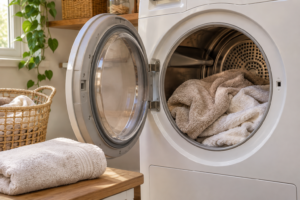
When towels need two dryer cycles after previously drying in one, the exhaust vent deserves attention. It is one possible explanation, not a diagnosis. Load size, cycle selection, the amount of water left by the washer and an appliance problem can also change the result. The useful question is what changed, and whether the change affects similar loads.
When towels need two dryer cycles, compare similar loads
Think about the last few loads you remember. Six ordinary bath towels are a more useful comparison than a mixed load containing sheets, washcloths and a heavy bath mat. If a new towel set is noticeably thicker, describe that difference. If the same towels on the same settings suddenly take much longer, that is a different pattern worth reporting.
Use observations from laundry you have already done. You do not need to run extra cycles to create evidence. Note whether everything remains damp or whether one tightly bundled item is the exception. A towel caught inside a sheet tells a different story from a whole drum of laundry that stays damp.
Remember what came out of the washer
Were the towels unusually wet before they entered the dryer? GE Appliances explains that initial wetness, fabric and load size affect drying time. A changed spin setting or a washer problem may leave the dryer with more moisture to remove. Report unusually wet laundry without assuming the dryer caused it.
Check the selected cycle against the care labels and the appliance manual. A quick cycle intended for a small load may not suit a full basket of towels. Energy saving options can also change expected cycle length. Avoid automatically raising the heat; choose settings that the towel maker and dryer manufacturer permit.
A clean screen does not clear the entire exhaust path
Continue the lint screen care specified in the dryer manual. The removable screen and the duct leading outside are separate parts of the system. Cleaning lint from the screen does not tell you whether the rest of the route is clear. Report when the vent was last professionally serviced, if you know, rather than guessing from the screen alone. If towels need two dryer cycles, a clean lint screen alone does not rule out an exhaust restriction.
Whirlpool lists restricted venting among the causes of long drying times. A vent problem can involve accumulated lint, a crushed connection or an unsuitable route. Those conditions need different responses. Cleaning removes material; it does not automatically correct a damaged or poorly configured installation.
Describe changes without taking the dryer apart
Useful details include the model, any display message, when the change began and whether the appliance was recently installed or moved. Copy an error message exactly. An airflow warning is useful information, but it does not locate the problem by itself. Do not disconnect the exhaust or run the dryer into the room as a test.
If you notice smoke, a burning smell or another immediate danger, stop using the dryer and seek appropriate emergency help. Do not keep restarting it to finish the towels. For ordinary performance changes without an immediate hazard, arrange an assessment instead of allowing a second cycle to become the permanent workaround.
Note whether damp bath towels are the only items affected or whether ordinary clothing also takes longer. That comparison is useful when assessing a possible restricted dryer vent, but it cannot establish the cause by itself.
Match the appointment to the problem
Ask what a vent cleaning visit covers and how an unresolved appliance concern will be handled. A heating fault, washer issue or installation correction may require another professional. No phone description can guarantee that cleaning alone will restore the old drying time, and a particular number of minutes should not be promised.
For dryer vent cleaning in Ann Arbor, contact Healthy Carpets with the change you have noticed and the type of laundry involved. Ask whether your vent layout and symptoms fit the service. Once the scope is agreed, use our dryer vent appointment preparation guide for access arrangements. Keep the comparison simple: the same towels, the settings used and what came out damp. Tell the cleaner whether towels need two dryer cycles consistently or only with certain loads.