A kitchen floor can look reasonably clean and still feel greasy underfoot. When that happens, the useful question is where the film comes from and what remains after your mop dries. Cooking residue and leftover cleaning product can produce similar symptoms, but they call for different changes to your routine.
Start by keeping people off any noticeably slippery area. Then look at the pattern without adding another product. A film concentrated around the stove tells a different story from streaks covering every tile in the room. Neither pattern proves the cause, but both help narrow the conversation.
Map the film before changing the cleaner
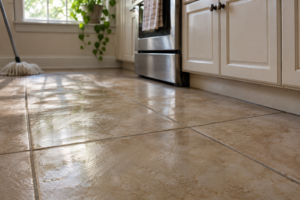
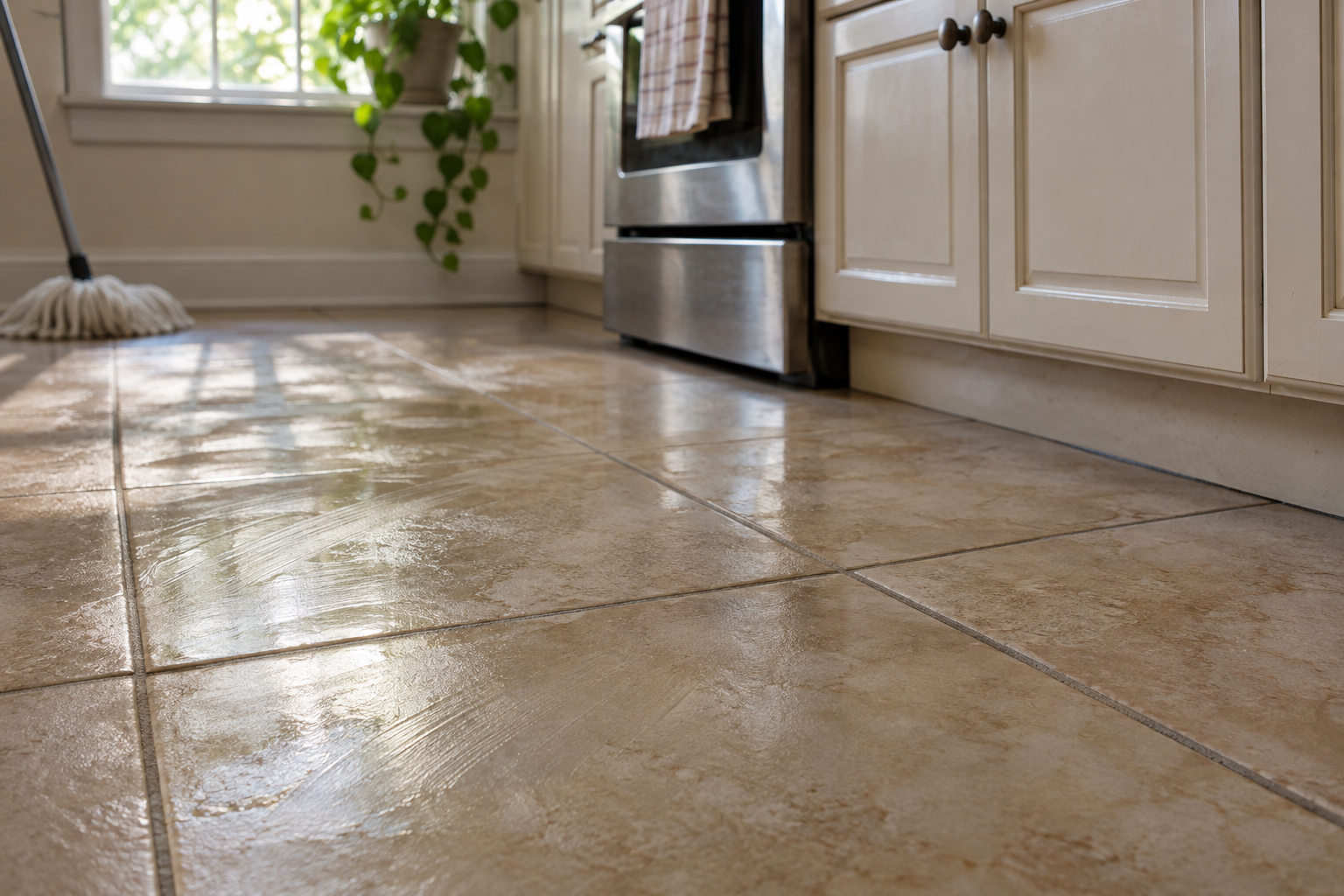
Check the floor near the stove, sink, food preparation counter and kitchen entrance. Note whether the problem follows the cooking area, the direction of your mop strokes or a route through the room. Inspect in ordinary light and then from a lower angle where reflections show streaks. Do not test traction by sliding across the floor.
For example, a small patch beside a frequently used frying pan may need attention to food residue. An even sticky layer that appeared after changing floor products makes the product and dilution worth reviewing. A floor that feels greasy only while wet should be described that way, rather than assumed to have the same problem as a dry floor.
Check what is going into the bucket
Read the cleaner label and the tile manufacturer instructions together. A product suitable for the tile face may still have restrictions for grout, natural stone borders or a previous coating. Measure the recommended amount instead of pouring by eye. More concentrate does not automatically mean better cleaning, and it can make removal of leftover product harder.
Keep the bottle or take a clear photograph of its label. Include any spray cleaner used between full mopping sessions. Dish soap, a floor polish and a general cleaner may each have been applied at different times, so describing the complete routine is more useful than naming only the most recent product. Do not combine products in an attempt to cancel out the film.
Separate loosening the film from removing it
A quick pass may spread a greasy patch over a wider area. Follow the approved cleaner directions for contact time and agitation, and remove the loosened material with clean tools. Work in manageable sections so you can tell which area has been cleaned and rinsed. Avoid letting a cleaning solution dry on the surface unless its instructions specifically call for that.
Daltile recommends fresh water for rinsing ceramic and porcelain tile and warns that dirty mop water redistributes soil. A heavily used mop pad deserves attention too. If it is already loaded with residue, continuing across the room can leave a different looking film without solving the original problem. Use the care instructions for your particular floor to choose the rinse method.
Give the dry floor a fair inspection
Once the floor is dry and safe to approach, compare the same small areas you checked earlier. Look for remaining streaks, tackiness and patches around cooking stations. Record whether the change lasted through normal use. This is more informative than repeatedly treating the entire room with increasingly strong products.
Grout that remains dark is a separate visual concern from a slippery tile face. Our guide to grout that looks dirty again after mopping explains that distinction. Do not assume that a darker joint needs the same treatment as an oily surface, or that every color difference is removable soil.
Describe the problem when requesting cleaning
When discussing tile and grout cleaning with Healthy Carpets, mention the room, known tile material, where the film is strongest and every product already used. Include whether the floor has a polish or coating and whether any tile is loose or grout is missing. Ask what can be assessed before work begins and what maintenance should follow. A useful cleaning plan addresses the actual residue while respecting the surface underneath it.