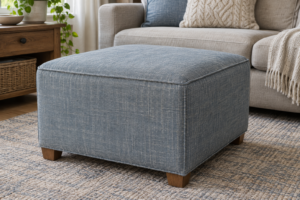
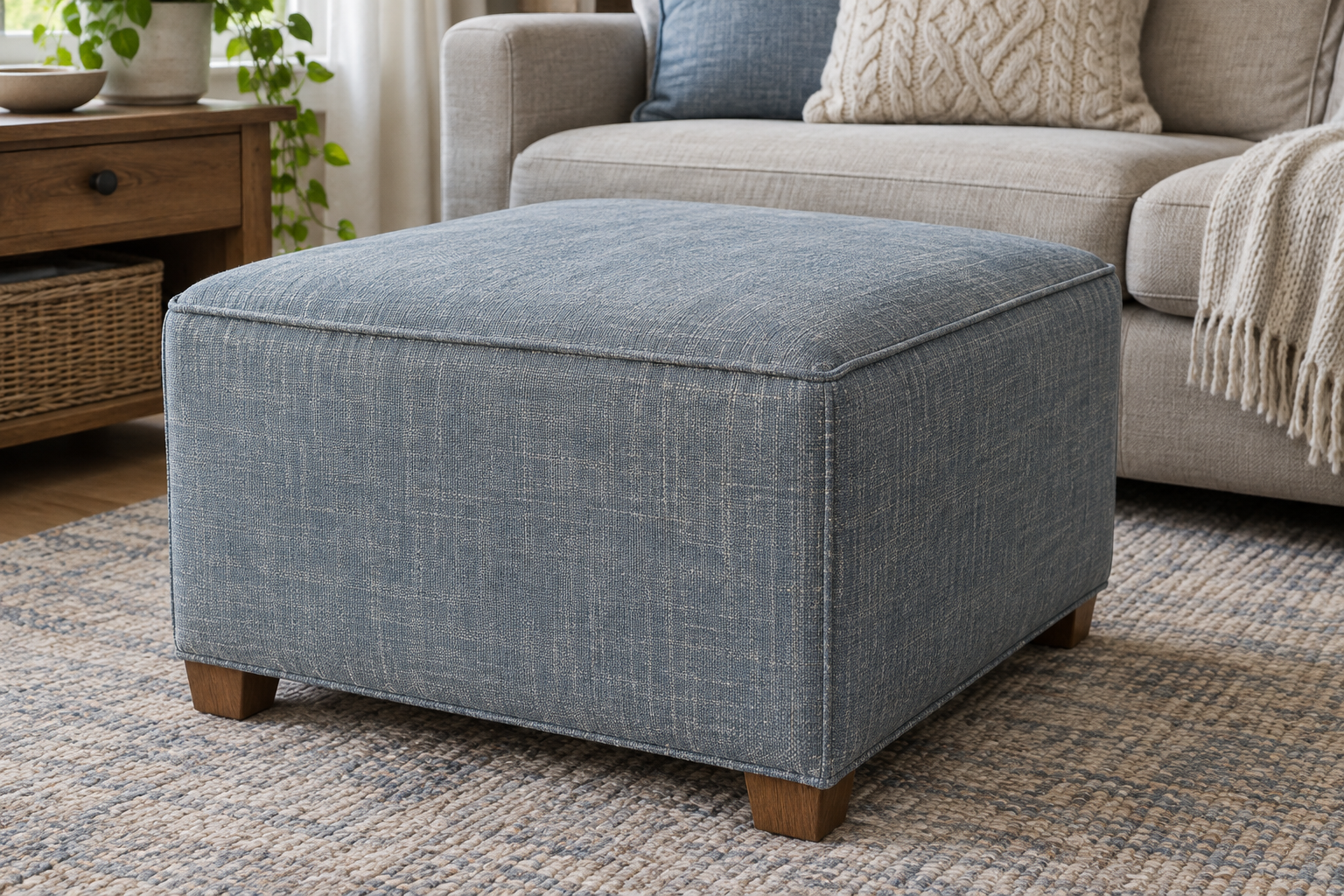
A fabric ottoman may be suitable for professional cleaning, but keeping its shape depends on more than the fabric on top. Padding, seams, tufting and the structure underneath all matter. Cleaning can address suitable surface soil. It cannot rebuild a flattened cushion, tighten a loose frame or guarantee that an already distorted cover will become smooth again.
Before deciding what to do, look at the ottoman as a piece of furniture rather than a large removable cushion. A small footstool, a padded storage chest and a broad coffee table ottoman can have very different construction. Healthy Carpets can discuss your item and whether an upholstery assessment is appropriate before any cleaning method is chosen.
Separate fabric ottoman soil from shape changes
Look across the top in ordinary daylight. Is the darker area also the place where feet usually rest? Does the surface dip even when nobody is touching it? Is a seam pulling sideways, or is the fabric simply showing the direction of its texture? These observations help explain the concern without trying to diagnose it yourself.
Photograph the ottoman from the side as well as from above. A top view can hide sagging padding or a lid that no longer sits flat. Tell the cleaner whether the shape changed gradually, after a spill or after a previous cleaning attempt. If the ottoman is unstable, has broken legs or has a damaged hinge, discuss repair before cleaning. Upholstery service should not be expected to solve a structural problem.
Tufting and seams deserve a closer look
Buttons, pleats and deep seams create places where crumbs and loose debris can collect. They also make the surface more complicated than a flat cushion. Avoid digging into these details with a sharp object or pulling fabric aside to reach a mark. A loose button or separating seam should be pointed out before work begins.
If routine vacuuming is permitted by the maker, use a suitable upholstery attachment gently and avoid catching trim or loose threads. Stop if the fabric pulls or a seam appears fragile. The goal is to remove accessible loose debris, not to force every particle out of a deep fold. Do not add water to a crevice simply because the vacuum cannot reach it.
A storage lid changes the questions
A storage ottoman can have fabric on the lid, sides and inner rim, with different materials inside. Empty the compartment before an agreed appointment and mention any spill that entered it. Ask whether the interior is part of the proposed work. Cleaning the outside does not establish that material inside the compartment or padding has been addressed. A fabric ottoman with storage needs an agreed scope for the lid, outside panels and any accessible interior.
Do not detach a hinged lid or overturn a heavy ottoman to find a label. Share the model information if you have it, or take a photo of an accessible tag. The manufacturer may specify how the fabric should be treated and whether any cover is intended to come off. A zipper or hidden fastening alone is not permission to remove and wash the covering.
Why soaking is a poor shortcut
An ottoman that looks heavily soiled can tempt an owner to scrub the entire top with a wet brush. That makes it difficult to control how far moisture travels into padding, seams and underlying materials. It also treats all parts as though they have the same tolerance for moisture. Follow the specific care instructions and avoid soaking an unknown construction.
If a spill is recent, remove loose material carefully and follow the maker’s immediate spill guidance. Keep a record of products already applied. If the fabric has become stiff, developed a ring or changed texture, stop adding treatments and describe what happened. Those changes are useful assessment information, not a reason to keep scrubbing.
Ask about ottoman padding as well as the visible cover, especially after a spill. Tufted upholstery care also needs attention to folds, buttons and areas that may dry differently from the flat fabric.
Plan for the ottoman to stay out of use
Ask how the item should be positioned during drying and when it can be used again. Do not put a tray, blanket or decorative stack back over the cleaned surface until advised that it is ready. A storage lid and thick padding can complicate readiness, so avoid assuming that a dry feeling patch on top settles the question for the whole item.
When requesting upholstery cleaning from Healthy Carpets, send the ottoman’s dimensions, fabric information and photos of any distortion. If the appointment includes a sofa, the sofa preparation checklist can help organize the shared work area. Confirm which ottoman surfaces can be handled and what appearance changes may remain. For a fabric ottoman, confirm the drying arrangements as well as the surfaces included in the estimate.