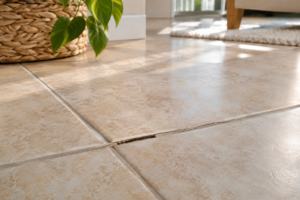
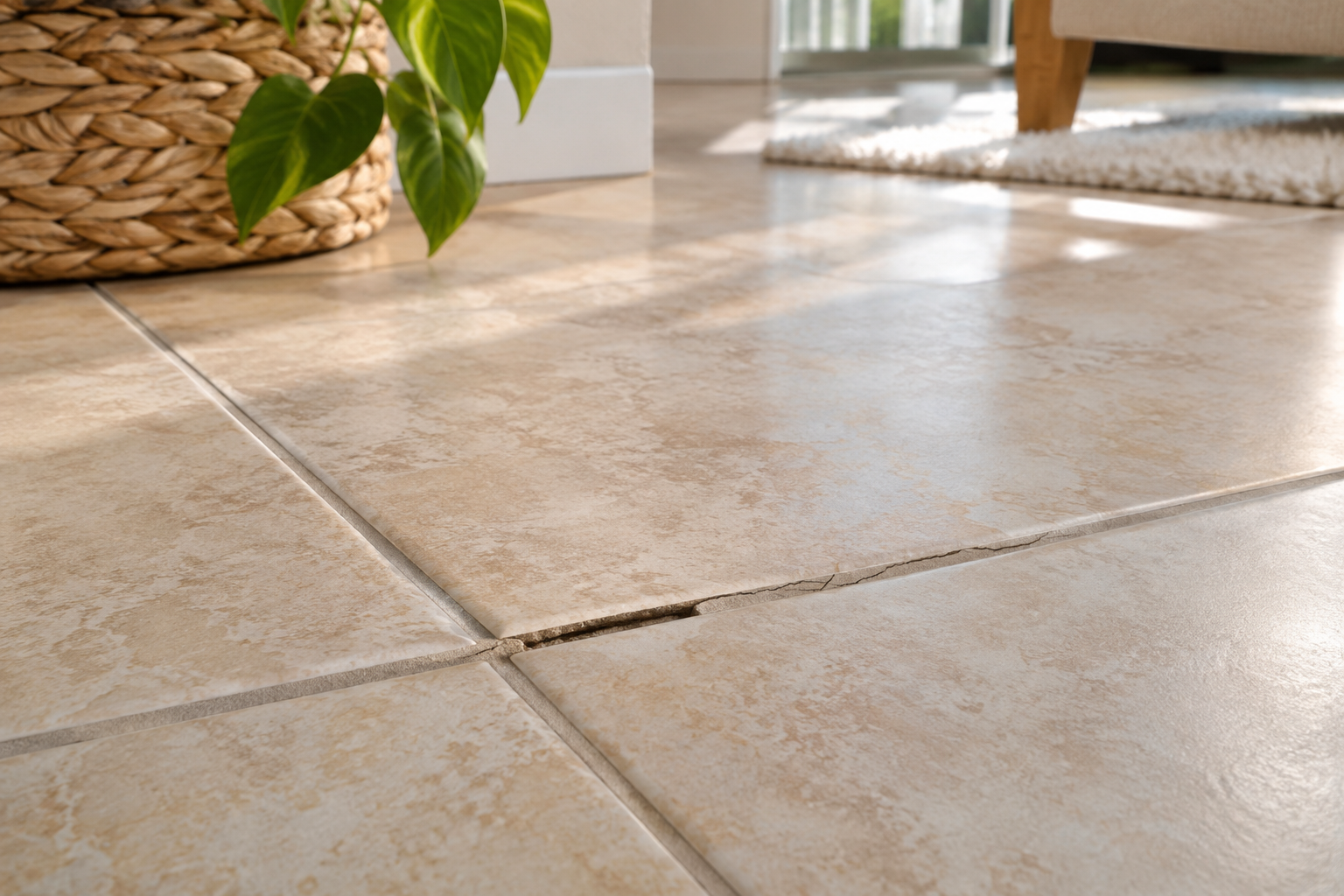
Professional tile cleaning cannot replace missing grout or repair a crack. It can address suitable surface soil, but missing material and movement belong in a separate assessment. If a floor has both dirty grout and damaged joints, identifying the damage before cleaning helps you choose the right order of work.
You do not need to diagnose the installation yourself. A useful first step is to describe exactly what you can see: a narrow line through the grout, a section where material is gone, or a tile that shifts under ordinary use. Those observations are more helpful than calling every dark line a stain.
Distinguish missing grout from a dark joint
Examine the area with good room lighting. A dark grout joint may be intact, while a missing section has a visible recess or interruption in the material. Take a photograph from above and another from a slight angle. Include adjacent intact joints so the person reviewing the pictures can compare their shape, not just their color.
Do not dig into a joint with a screwdriver to see how far the damage goes. Avoid scraping off an edge that seems loose. Photograph what is present and note whether you have found loose crumbs during routine sweeping. Deliberately enlarging the opening makes the original condition harder to evaluate and may create more work.
Tell the difference between observations and conclusions
A crack crossing several joints, one isolated missing corner and a gap beside a cabinet are different patterns. Record where each occurs and when you first noticed it. If it changes with use, say so. These details may help an installer or other appropriate professional decide what needs closer examination, but they do not establish a cause by themselves.
Some perimeter joints contain a flexible sealant rather than the same material used between tiles. Do not assume every soft joint has failed or should be replaced with hard grout. If you have installation records, share them. When material identification is uncertain, ask before applying a cleaner or attempting a patch.
Raise movement and moisture concerns early
If a tile rocks, lifts or has a sharp damaged edge, describe that separately from the cleaning request. Avoid repeatedly stepping on it to demonstrate the movement. Keep the affected route out of normal use when it presents a trip or cut risk, and arrange an appropriate assessment of the installation. Report movement or sharp damage alongside missing grout so the installation concern is not mistaken for ordinary soil.
A joint that repeatedly becomes wet also needs more than a cosmetic explanation. Note any nearby appliance, plumbing fixture or known spill. Cleaning should not be used to hide an unresolved water problem. The right next step may involve another trade, depending on what the inspection finds. A photograph alone cannot establish that a floor is dry underneath.
Agree on the sequence before an appointment
Tell the cleaning company about damage when you request service, rather than waiting until the equipment is set up. Ask whether the area can be cleaned safely in its current condition and which sections may need to be excluded. If repairs are planned, the repair professional should provide the product specific waiting and care instructions before later cleaning.
For example, a kitchen may have sound grout across the main floor but an open joint at the doorway. That does not make the whole room the same problem. A clear description allows the cleaning scope and the repair concern to be discussed separately. It also prevents an estimate for cleaning from being mistaken for an estimate that includes rebuilding joints.
Point out cracked grout joints before an appointment, even where the surrounding tile seems sound. Discuss tile cleaning limitations separately from any repair the floor needs.
Set the right expectation for appearance
After suitable cleaning, grout may still have shade differences, worn edges or old repair patches. Cleaning is not a way to reshape the joint or make different grout batches match. For intact joints that simply look dirty, see our explanation of why grout can look dirty after mopping.
Healthy Carpets offers tile and grout cleaning in Ann Arbor. Share photos of cracks, gaps and any movement before booking, and ask what is included in the proposed cleaning. Do not assume grout replacement, tile resetting or sealant repair is part of that service. Separating those needs makes it easier to plan useful work and judge the result fairly. Mention missing grout when booking so cleaning and any separate repair needs can be discussed in the right order.